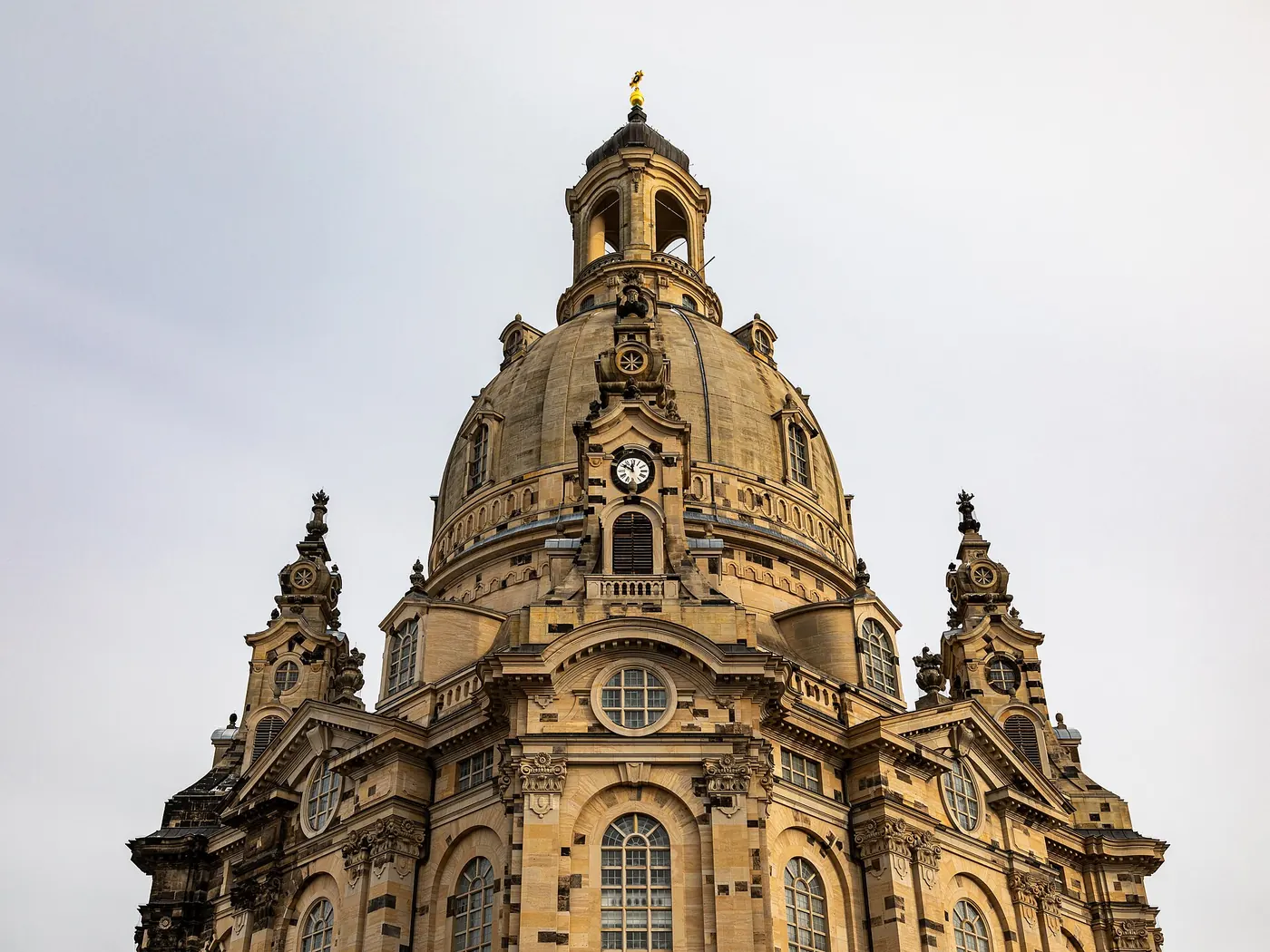
City · Saxony
DresdenInvesting in Dresden Real Estate: What Do the Chip Plants Add to the Apartment Market?
Investing in Dresden real estate interests investors mainly because of the chip industry: TSMC's ESMC plant is being built in the city, alongside Infineon, GlobalFoundries and Bosch. In 2025 a resale apartment sold for an average of about 2,705 EUR per sq m, up about 4% in one year, the average rent according to the city rent index is 7.33 EUR per sq m, and transfer tax in Saxony is 5.5%. The question investors ask is how much demand the plants will add to the market, and at what pace.
Video
Dresden in one minute
Investing in Dresden: the figures, what to check and common questions, in a short video. All details and sources are in the text below.
No narration, background music only. The video does not play by itself.
In brief
- Capital of Saxony, about 571,500 residents at the end of 2025 (City of Dresden, preliminary data).
- Resale apartment: about 2,705 €/sq m on average in 2025, up about 4% (Dresden Valuation Committee, preliminary data).
- Average rent according to the city rent index (Mietspiegel) 2025: 7.33 €/sq m, up 3.8%, valid until the end of 2026.
- The ESMC plant celebrated the completion of its structural shell in September 2026. Installation of the first production equipment is expected in the second half of 2027.
- The rent brake applies in Dresden until 30.06.2027.
Why here
Why do investors look at Dresden real estate?
Dresden is one of the places in eastern Germany with a new, tangible demand story. "Silicon Saxony", Saxony's microelectronics cluster, has operated in the city for decades, and TSMC's decision to build its first European plant here gave it a different scale. The page on investing in eastern Germany explains why this matters: in the east, new jobs are what drive housing demand.
The second reason is price. An apartment in Dresden costs about the same as in Leipzig, much less than in Munich or Hamburg. Whoever buys today enters at the price of a stable city, with potential for additional demand from industry.
The third reason is the university. TU Dresden is one of Germany's universities of excellence, and it supplies engineers to industry and students and researchers to the rental market.
In numbers
Key figures: Dresden in numbers
- Population571,510City of Dresden, residents' register, 31.12.2025 (preliminary) [verify against dresden.de]
- Resale apartment priceabout 2,705 €/sq m (2024: about 2,610)Dresden Valuation Committee, preliminary data for 2025 [verify against the full report]
- Net rent7.33 €/sq m on average (+3.8%)City rent index 2025, valid 1.1.2025–31.12.2026
- Transfer tax5.5%Saxony, since 2023, as of November 2026
- StudentsSaxon State Statistical Office
What stands out in the table is the ratio between price and rent. A price of 2,705 €/sq m against an average rent of 7.33 €/sq m gives a gross yield of about 3.3% by the index. The official index also includes long-standing contracts, so in a new lease the rent is usually higher, within the limits of the rent brake.
Economy and employment: what is really happening in the chip industry?
ESMC is a joint venture of TSMC with Bosch, Infineon and NXP. According to Focus Taiwan, the topping-out ceremony was held on 14 September 2026, 25 months after the cornerstone was laid, and the company's president said the project is progressing on plan and within budget. Installation of the first production equipment is expected in the second half of 2027, and before production starts the cleanrooms and infrastructure are being completed.
Mayor Dirk Hilbert estimated, according to the same report, that by 2030 between 15 and 20 thousand workers will move to the area. This is a city estimate, not a figure. In 2027 about 600 TSMC engineers are expected to arrive, with families and supplier employees. Infineon is expanding its own plant in the city at the same time.
Beyond chips, Dresden is the capital of Saxony, with government offices, research institutions (including Fraunhofer and Max Planck institutes) and strong tourism in the old town and along the banks of the Elbe. The public and research sectors stabilize demand over time. Labor market data for the region is published monthly by the Dresden Employment Agency.
Want to check whether it suits you?
Book an intro callWhere in the city
Dresden districts: where people live and where to invest
- Äußere Neustadt: north of the Elbe. A dense Gründerzeit district, alternative and highly sought after by young people and students. High rental demand.
- Striesen and Blasewitz: east of the city. Villas, Gründerzeit buildings and green streets. Families and professionals, stability and long-term value retention.
- Südvorstadt: near the TU Dresden campus. Steady demand from students and researchers, many small apartments.
- Pieschen: along the Elbe, northwest. A former working-class district that is being renewed. Lower prices than Neustadt, with potential.
- Klotzsche and the north: close to the airport and the industrial area where the chip plants are. If the forecast for workers materializes, it will be felt here first.
- Gorbitz and Prohlis: large panel-block (Plattenbau) districts in the west and southeast. An accessible entry price, and each building is checked on its own merits.
What you buy
Which properties suit Dresden?
A small apartment near the campus or in Neustadt. Steady demand from students and young people. It suits those willing to manage actively, with tenant turnover every few years.
A family apartment in Striesen or Blasewitz. Stable tenants for the long term and value retention. It suits those who prefer stability.
An apartment in the north of the city, close to the chip area. The deal is calculated on today's demand, and demand from the new workers is additional potential.
Renovated panel buildings. An accessible entry price and a higher gross yield on paper. Check the condition of the building, the owners' association fees and the occupancy in the building. The guide on investing in a whole building explains what to check in a large building.
Before you decide
Advantages and what to check in Dresden
Advantages
- A huge investment in the chip industry, with global partners
- A university of excellence and research institutions
- A state capital with a stable public sector
- Prices lower than western Germany, and a rise of about 4% in 2025
- Sought-after districts with Gründerzeit stock
What to check
- Calculate the deal on existing demand, with the forecast as a bonus
- Proximity to the campus, transport and employment areas
- The rent in the existing contract against the city rent index
- The rent brake rules in a new lease
- The condition of the building, owners' association fees and the renovation plan
Who is Dresden real estate especially suited to?
Dresden real estate suits an investor looking for a stable city in eastern Germany, with a broad base of university, research and public sector, and with potential for additional demand from the chip industry. It suits those planning a long holding who build the calculation on existing demand, with the new workers as an addition. How demographics affect real estate in different cities is explained in the guide demographics and real estate in Germany.
What is important to know about renting in Dresden?
The official index, 7.33 €/sq m, is the basis for rent increases in existing contracts, so yield is calculated on the actual contract and not on listings. In the north of the city it is worth making sure the price matches today's demand. The current index is valid until 31.12.2026, and the next one will be set according to a new survey.
What does the rent brake do in Dresden?
The Saxon government extended the rent brake in Dresden and Leipzig until 30.06.2027 (Deutscher Mieterbund list, as of November 2026). In a new lease the rent is limited to up to 10% above the local customary rent, as set by the index. The main exceptions are an apartment first let after October 2014 and an apartment after a comprehensive renovation. In October 2026 a proposal to extend it until the end of 2029 was submitted to the Saxon parliament, so it is right to calculate on the scenario in which it stays. The guide on the rent brake details the exceptions.
How do you calculate yield correctly in Dresden?
A gross yield of 3%–3.7% is only the starting point. For a net calculation, deduct owners' association fees that are not passed on to the tenant, management, maintenance and vacancy between tenants, and add the effect of depreciation on tax. How to do this step by step is explained in the guide net yield from real estate in Germany.
Illustrative example
A calculation example: an apartment in Dresden
To the yield calculatorAn example for illustration only. A 60 sq m apartment at 2,705 €/sq m, that is 162,300 EUR. Transfer tax 5.5% (8,927 EUR), notary and registration usually about 1.5%–2% by market estimates (about 2,430–3,250 EUR). Without a broker, the entry is about 174 thousand EUR.
According to the index, 7.33 €/sq m, annual income before expenses is about 5,280 EUR, a gross yield of about 3%. If a new lease reaches 9 €/sq m [assumption, not a figure], the gross yield rises to about 3.7%. The difference between the two scenarios is the difference between an average deal and a good one, so check the real rent in the building before signing. The costs are detailed in the guide closing costs for buying a property, and financing on the page mortgages in Germany for Israelis.
Open properties in Dresden
Frequently asked questions
What people ask us About Dresden
Is it worth investing in Dresden real estate because of the TSMC plant?
The plant is a good reason to look at Dresden, and it joins an existing base of university, research and public sector. Build the deal on today's demand, with the new workers as an addition.
When does the ESMC plant in Dresden start operating?
According to a September 2026 report, the plant's structural shell is complete and installation of the first production equipment is planned for the second half of 2027. The start of production depends on completing the cleanrooms and infrastructure.
How much does an apartment in Dresden cost?
According to preliminary data from the Dresden Valuation Committee, a resale apartment sold in 2025 for an average of about 2,705 €/sq m, about 4% more than in 2024. In sought-after districts the price is higher, and in the panel-block districts it is lower.
What is the rent in Dresden?
According to the city rent index 2025, the average net rent is 7.33 €/sq m, up 3.8%. The index is valid until 31.12.2026. In new contracts the rent is higher, within the limits of the rent brake.
Dresden or Leipzig?
Leipzig is larger, with industry and logistics and a higher rent. Dresden relies on chips, research and the public sector. Both are in Saxony, with 5.5% transfer tax and a rent brake until mid-2027. The broader comparison is on the page east or west Germany.
Sources
- City of Dresden: city rent index 2025, valid until 31.12.2026 (2025)
- Focus Taiwan, topping-out ceremony at the ESMC plant in Dresden (September 2026)
- Sachsen Fernsehen, Dresden rent index 2025 (December 2024)
- Dresden Employment Agency, labor market in July 2026 (2026)
- Deutscher Mieterbund, list of municipalities with a rent brake (2026)
- German Ministry of Justice: tenancy law, the rent brake (in force 2026)
- City of Dresden, press releases on population (January 2026) and on the property market (2026) [verify: dresden.de returned 503 on checking, add a link before publishing]
This is not investment, tax or legal advice. All investment involves risk.

Intro call
Let's check Dresden together
We would be glad to check a property in Dresden with you, based on today's demand and on the potential from the new industry.
In the photo: Munich and the Alps, Bavaria