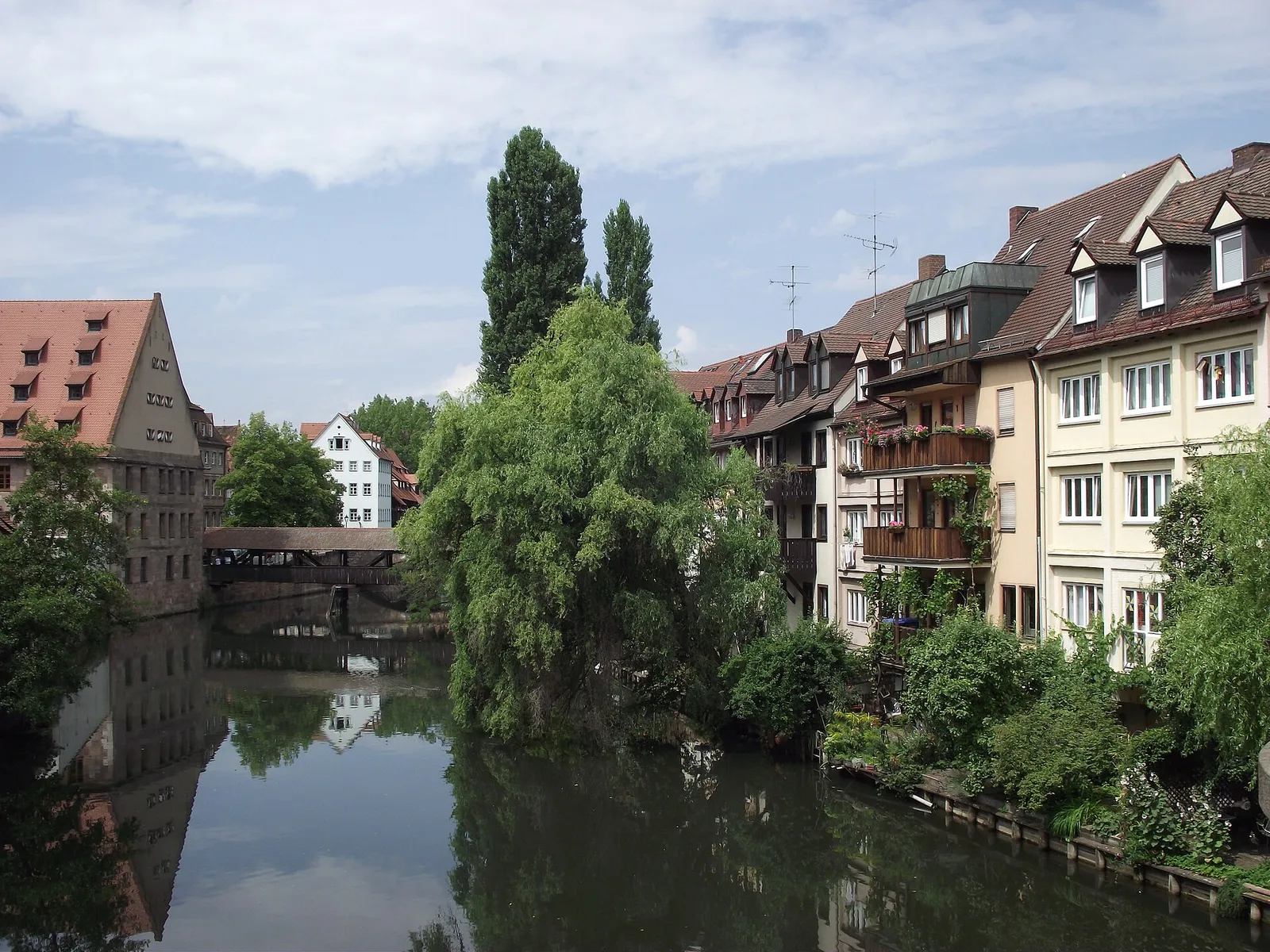
City · Bavaria
NurembergInvesting in Nuremberg Real Estate: What to Know About Bavaria's Second City
Investing in Nuremberg real estate appeals to investors who want Bavaria's stability at an entry price below Munich's. The city has about 530 thousand residents, the transfer tax in Bavaria is 3.5%, among the lowest in Germany, and the average rent according to the city's rent index has risen to 10.33 euros per sqm. It is a stable market, with broad demand and good liquidity.
Video
Nuremberg in one minute
Investing in Nuremberg: the figures, what to check and common questions, in a short video. All details and sources are in the text below.
No narration, background music only. The video does not play by itself.
In brief
- 530,133 residents (Bavarian State Office for Statistics, 30.06.2025). The second largest city in Bavaria.
- Transfer tax of 3.5% in Bavaria (transfer tax (Grunderwerbsteuer), as of November 2026).
- Average rent of 10.33 EUR/sqm according to the 2026 rent index, versus 9.65 in 2024 (City of Nuremberg).
- Resale apartments sold in 2025 across a wide range of 1,800–6,800 EUR/sqm, with a rise of about 4% (Nuremberg valuation committee).
- The rent brake (Mietpreisbremse) applies in the city until the end of 2029.
Why here
Why do investors look at Nuremberg real estate?
The first reason is the location within Bavaria. It is a wealthy state with relatively low unemployment and a transfer tax of only 3.5%, and the difference from NRW (6.5%) is 30 thousand euros on a property of one million. The page on real estate in Bavaria details the comparison between the state's cities.
The second reason is the gap from Munich. Someone looking for a big city with a university, an airport and diverse employment, at a lower entry price, usually ends up in Nuremberg. The direct comparison is on the page real estate in Munich.
The third reason is the stable demand. Nuremberg is part of a single metropolitan area with Fürth and Erlangen, and its rental market rests on workers, students and labor migrants. It is a market where a good deal stays good over the years, with rents rising gradually.
In numbers
Key figures: Nuremberg in numbers
- Population530,133Bavarian State Office for Statistics, 30.06.2025 (2022 census base)
- Resale apartment price1,800–6,800 EUR/sqm (rise of about 4%)Valuation committee, 2025 market report
- New apartment price4,600–9,500 EUR/sqmValuation committee, 2025
- Net rent (excluding costs)10.33 EUR/sqm on averageRent index 2026, City of Nuremberg
- Transfer tax3.5%Transfer tax, Bavaria, as of November 2026
- Real estate transactions5,621 in 2025 (4,666 in 2024)Valuation committee, 2025
- Students39,209 at the University of Erlangen-Nuremberg (FAU)Bavarian State Office for Statistics, winter 2025/26
The valuation committee publishes a range and not an average, and a range of 1,800 to 6,800 euros means that the location and the condition of the building set the price. That is why each property is checked by its own address.
The number of transactions rose in 2025 to 5,621, versus 4,666 in 2024, and turnover reached about 2.4 billion euros (Nuremberg valuation committee, 2025). The market is active, and prices of existing buildings rose by about 4%.
Economy and employment: what does demand rest on?
Nuremberg is a city of industry and services. Siemens employs thousands in the region in electrical engineering and automation, and thousands also work at DATEV, the software company of the German accountants, headquartered here. The city has a large exhibition center (NürnbergMesse) and an international airport.
Around the city is a wider cluster. Nearby Erlangen is a medical technology center, and in Herzogenaurach, about a quarter of an hour's drive away, are the headquarters of adidas and Puma. For an investor, this is a good spread: demand does not depend on one employer or one industry.
This diversity, between industry, software, sports, medicine and trade fairs, is what keeps the Nuremberg rental market stable over time.
Want to check whether it suits you?
Book an intro callWhere in the city
Which Nuremberg districts do people invest in?
Nuremberg is well divided by character. Here is the general picture, with no per-district numbers until there is an updated official source:
- Altstadt (Old Town, St. Lorenz and St. Sebald): inside the walls. Highly sought after, prices at the top end, limited supply. Suited to value retention.
- Gostenhof: west of the Old Town. A district of immigrants and artists that has been renewed, with many Altbau buildings. High demand from young people.
- Südstadt (Galgenhof, Gibitzenhof, Steinbühl): south of the main railway station. Dense and urban, lower prices and a higher yield. Each address is checked on its own.
- St. Johannis and Maxfeld: the north of the city, greener and quieter, popular with families. High prices, low tenant turnover.
- Langwasser: a large 1960s–1970s district in the southeast, with high-rise buildings and a metro line. A relatively low entry price. You check the condition of the building and the building fees (Hausgeld).
What you buy
Which properties suit Nuremberg?
A single apartment in a shared building. This is the common way to enter the city. The price is low relative to a whole building, and you are part of the owners' community and pay Hausgeld. Before buying, you read the minutes and the renovation reserve. The guide on building fees in Germany explains what to check.
A small student apartment. With almost 40 thousand students at FAU alone, there is demand for one- or two-room apartments. In the valuation report for 2025, about half of the new apartments sold were one-room apartments. Before buying, you check the location relative to the campus and transport, and which similar projects are nearby.
A small residential building (Mehrfamilienhaus). According to the valuation committee, such buildings sold in 2025 typically for 780 thousand to 2.3 million euros, with a rise of about 6%. It requires more capital, but gives full control. The full comparison is on the page apartment or building as an investment.
Altbau vs. Neubau. An old building has a lower price, and the depreciation (AfA) for a building from before 1925 is 2.5% a year. A new building has low maintenance and a better energy certificate. The guide Altbau or Neubau compares them.
Before you decide
Advantages and what to check in Nuremberg
Advantages
- Transfer tax of 3.5%, among the lowest in Germany
- Diverse economy, no dependence on one employer
- Demand from students, workers and migrants
- Good liquidity: about 5,600 transactions a year
- Prices of existing buildings rose by about 4% in 2025
What to check
- The rent versus the city's rent index
- The address and street: the price changes from block to block
- The building fees and the renovation reserve in the building
- The existing lease: level and age
- The condition of the roof and heating system in buildings from the 1960s and 1970s
What does the rent brake do in Nuremberg?
Nuremberg is on the list of municipalities where the rent brake applies until 31.12.2029, under the German tenancy law (Deutscher Mieterbund list, as of November 2026). In a new lease, rent is limited to up to 10% above the locally customary rent. For an investor, this means building the business plan on the rent index, not on listings on websites. That way the calculation is accurate from day one.
Who is Nuremberg real estate especially suited for?
- An investor looking for stability in a big city: an active market, broad demand and good liquidity.
- Those who want Bavaria at a price below Munich: a city with a university, an airport and diverse employment.
- Those planning a long holding period: gradually rising rents and value retention.
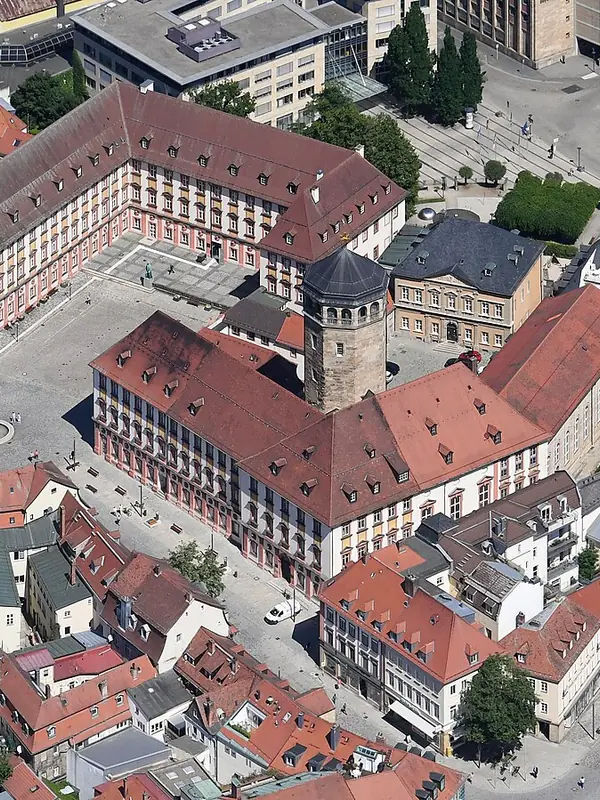
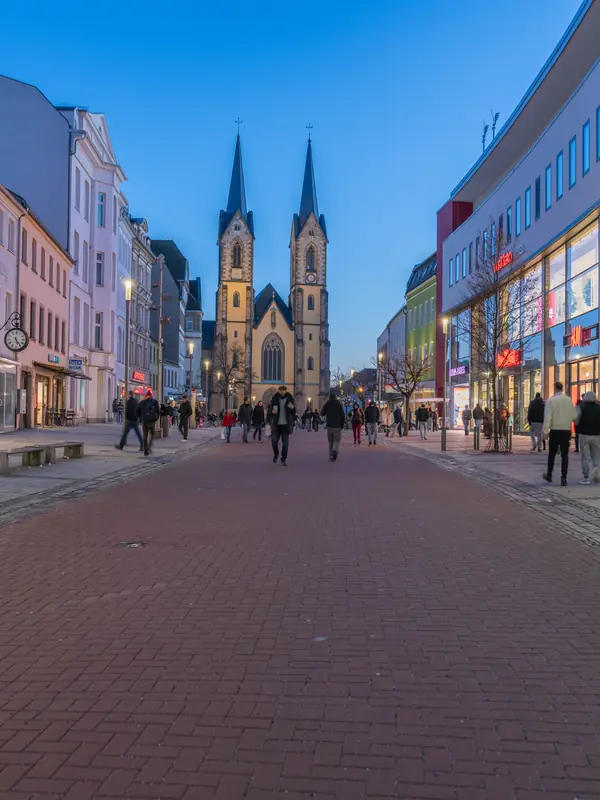
- Those looking for a lower entry price in Bavaria: it is worth reading about a big city vs. a small town and also checking Bayreuth or Hof.
What do you check before buying in Nuremberg?
First, calculate rent by the rent index and not by listings, because in a new lease the limit is set by the index. Second, check the building fees and the renovation reserve in buildings from the 1960s and 1970s, and ask in advance for the work plan for the roof and the heating system. Third, in an apartment with a long-standing tenant, read the lease: an old rent rises gradually, up to 15% in three years in a designated area.
Illustrative example
How much does it cost to buy an apartment in Nuremberg?
To the yield calculatorAn illustration only, with explicit assumptions. A 60 sqm apartment at 3,500 EUR/sqm, that is 210,000 euros. Additional costs: transfer tax of 3.5% (7,350 euros), notary and registration typically about 1.5%–2% according to market estimates (about 3,150–4,200 euros), and an agent if there is one. Without an agent, the entry reaches about 221 thousand euros, about 800 thousand shekels at a rate of 3.6–3.7 shekels per euro [verify the rate on the publication day].
If the apartment is rented at 10.33 EUR/sqm, the city average, the annual income before costs is about 7,440 euros, that is a gross yield of about 3.4% on the entry price. Net yield is calculated after Hausgeld that is not passed on to the tenant, management and tax. How to calculate it correctly is explained in the guide net yield from real estate in Germany, and the breakdown of costs is in the guide closing costs for buying property in Germany.
Open properties in Nuremberg
Frequently asked questions
What people ask us About Nuremberg
Is it worth investing in real estate in Nuremberg?
Nuremberg suits those who want a stable market, broad demand and a low transfer tax, in a big city with good liquidity. It is especially suited to those planning a long holding period and counting on value retention and gradually rising rents.
How much does an apartment in Nuremberg cost?
According to the Nuremberg valuation committee, resale apartments sold in 2025 in a range of 1,800–6,800 EUR/sqm, and new apartments at 4,600–9,500 EUR/sqm. The range is very wide, so the right price is set by the address, the floor and the condition of the building.
What is the average rent in Nuremberg?
According to the city's rent index (Mietenspiegel 2026), the average net rent is 10.33 EUR/sqm, versus 9.65 EUR/sqm in 2024. This is an average of all leases, including old ones, so rent in a new lease can be higher, within the limits of the rent brake.
What is the transfer tax in Nuremberg?
Nuremberg is in Bavaria, so the transfer tax is 3.5% of the property price (as of November 2026), among the lowest rates in Germany. On top of it you pay the notary, registration in the land register and sometimes agent fees.
Can an Israeli get a mortgage for an apartment in Nuremberg?
German banks sometimes finance non-residents too, usually with a higher equity requirement and more checks. How much capital is needed and which documents are requested is explained on the page mortgages in Germany for Israelis. Each bank decides based on your file.
Nuremberg or Munich?
Munich is more in demand and has held its value for decades. Nuremberg offers a lower entry price, a slightly higher yield and stable demand. Both are in Bavaria and enjoy the same transfer tax, and both are under the rent brake.
Sources
- Bavarian State Office for Statistics, population by municipality (30.06.2025)
- City of Nuremberg, 2025 real estate market report of the valuation committee (published 2026)
- City of Nuremberg, rent index 2026 (2026)
- Bavarian State Office for Statistics, students in winter 2025/26 (2026)
- German Ministry of Justice: transfer tax act, tax rate (in force 2026)
- German Ministry of Justice: tenancy law, rent brake (in force 2026)
- Deutscher Mieterbund, list of municipalities with a rent brake (2026)
This is not investment, tax or legal advice. Every investment involves risk.

Intro call
Let's check Nuremberg together
We would be glad to go through the calculation for a specific property in Nuremberg with you, including tax, rent by the index and running costs.
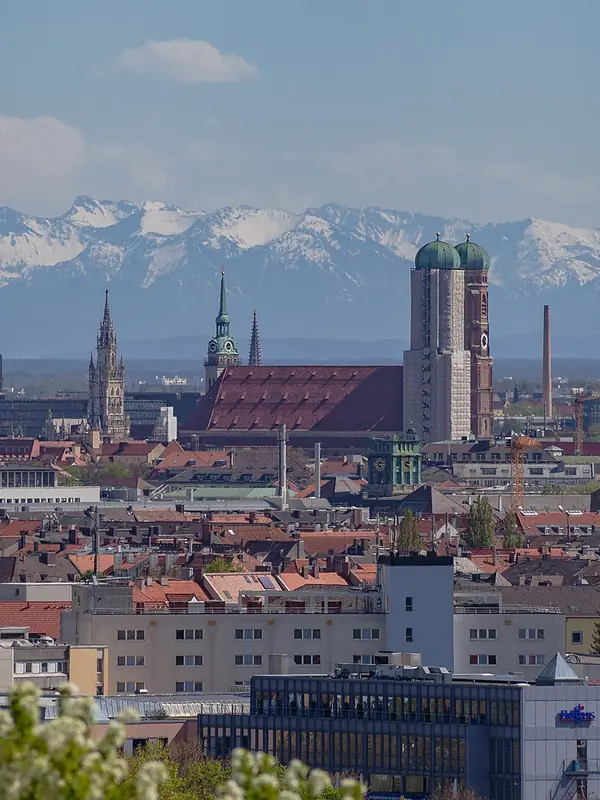
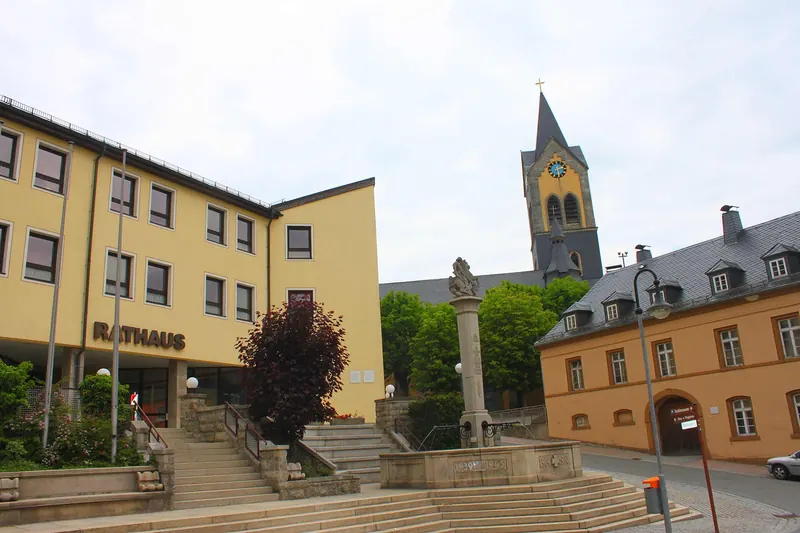
In the photo: Munich and the Alps, Bavaria