Region · Region
East GermanyInvesting in Eastern Germany Real Estate: How to Choose a Growing City
Investing in eastern Germany real estate attracts investors because of entry prices below the west, and because of cities that have returned to growth: in 2025 Leipzig and Chemnitz each grew by 0.7%, and Berlin by 0.4% (Destatis, 06/2026; Saxony Statistical Office, 07/2026). The important decision is not "east or west", but in which city, and in which district, demand will keep growing in 15 years.
Video
East Germany in one minute
Investing in East Germany: the figures, what to check and common questions, in a short video. All details and sources are in the text below.
No narration, background music only. The video does not play by itself.
In brief
- "Eastern Germany" here, as with Destatis: Saxony, Thuringia, Saxony-Anhalt, Brandenburg and Mecklenburg-Vorpommern. Berlin has its own page.
- In 2025 Leipzig and Chemnitz each grew by 0.7%. Migration to Saxony was positive: 98,234 arrivals against 84,729 departures.
- In Leipzig the average age is 42.3, a broad base of young tenants.
- Transfer tax: Saxony 5.5%, Thuringia and Saxony-Anhalt 5%, Mecklenburg 6%, Brandenburg 6.5%.
- The rule: cities with a large university, new employers and a fast train to a big city.
Why here
Why is eastern Germany on the table at all?
Since about 2010, the large eastern cities have been on a growth trend. Leipzig and Dresden have attracted students, technology companies, chip plants, logistics and young families, and whole districts of buildings from the early 20th century have been renovated. These cities rebuilt demand for apartments, and they continue to attract residents from all over Germany and abroad.
For the investor this creates an interesting combination: in the growing cities prices have already risen, but are still lower than the west, and rents are still lower than in Munich, Hamburg and Frankfurt. That is, an accessible entry price in a city with growing demand.
In numbers
Key figures: the demographics of the east
- Berlin+0.4%Destatis, 2025
- Saxony4,026,599 residentsSaxony Statistical Office, 31.12.2025
- Leipzig615,932 (+0.7%)Same
- Chemnitz+0.7%Same
- Migration to Saxony98,234 arrivals against 84,729 departuresSame, 2025
- Average age in Leipzig42.3Same
The important number in the table is migration. Saxony attracts more people than leave it, and a large share of them arrive in Leipzig, Dresden and Chemnitz. The average age in Leipzig, 42.3, means the city has a broad base of young tenants: students, couples and families. Details on what this means for real estate are in the guide to Germany's demographics.
Note the difference in the Leipzig figures: the Saxony Statistical Office counts 615,932 residents (based on the 2022 census), and the city counts 630,757 as of 30.09.2026, according to its residents' register. Both figures are correct in their own method. Always compare data from the same method.
The cities In the region
Transfer tax in the eastern states
| State | Transfer tax | In force from |
|---|---|---|
| Saxony (Sachsen) | 5.5% | 2023 |
| Thuringia (Thüringen) | 5% | 2024 (down from 6.5%) |
| Saxony-Anhalt (Sachsen-Anhalt) | 5% | 2012 |
| Mecklenburg-Vorpommern | 6% | 2019 |
| Brandenburg | 6.5% | 2015 |
| For comparison: Bavaria | 3.5% | 1997 |
Source: state rates table, as of November 2026; the federal base rate is 3.5%, according to the Real Estate Transfer Tax Act (Grunderwerbsteuer) [verify: each rate against the state finance ministry]. Thuringia lowered the tax in 2024, and on a property of 150,000 EUR the difference between it (7,500 EUR) and Brandenburg (9,750 EUR) is 2,250 EUR. All the other additional costs are detailed in the purchase costs guide.
Want to check whether it suits you?
Book an intro callHow do you identify a growing city in the east?
The federal institute BBSR classifies every municipality in Germany by its growth trend, using six indicators over five years (BBSR, 2019–2024):
- Change in population.
- Migration balance per 1,000 residents.
- Change in the working-age population (20–64).
- Change in the number of employees by place of work.
- Change in the unemployment rate.
- Change in the business tax base per resident.
This classification is an excellent tool for a foreign investor, because it is official, free, and combines demographics with economics. In the east, the large cities, Leipzig, Dresden, Potsdam and Jena, tend toward the growing groups [verify: classification of each municipality on the BBSR map].
Three more questions to check yourself: does the city have a large university? Does it have new employers, not only established ones? And does it have a fast train to a big city? A city that answers "yes" to all three is usually a city with stable rental demand.
The city map: where in the east?
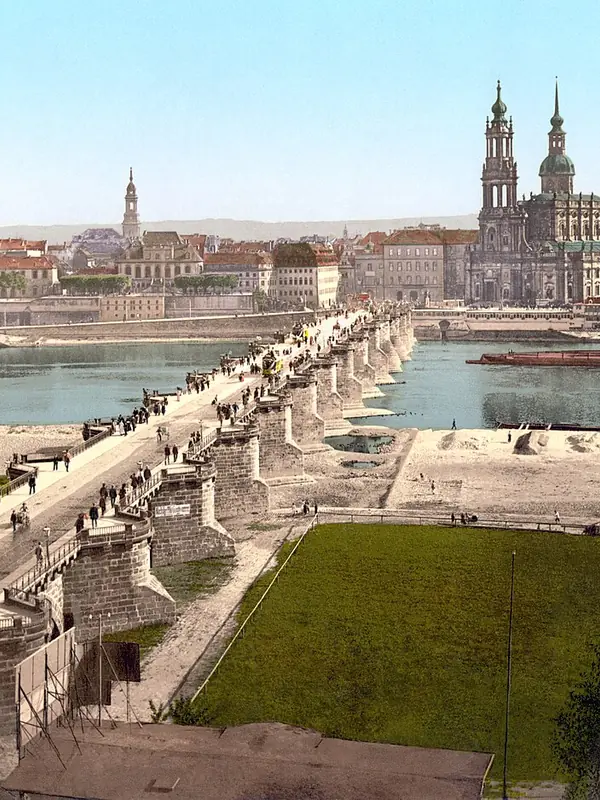
Leipzig
Leipzig is the large city in Saxony, and one of the growing cities in Germany over the last decade. Students, logistics, and an automotive industry in the surroundings. Prices have risen a lot since 2010, and are still much lower than Berlin [verify: price per sq m and rent]. There is a direct comparison in Berlin versus Leipzig.
Dresden
Dresden, the capital of Saxony, is known as the "Silicon Valley of Saxony" thanks to its chip industry, and it also has a new chip plant being built in partnership with TSMC [verify: timetable for operation]. A large technical university and demand from skilled workers. Here too prices have risen, and the city's data needs checking [verify: current population and price data].
Mid-size cities: Chemnitz, Erfurt, Jena, Magdeburg, Halle
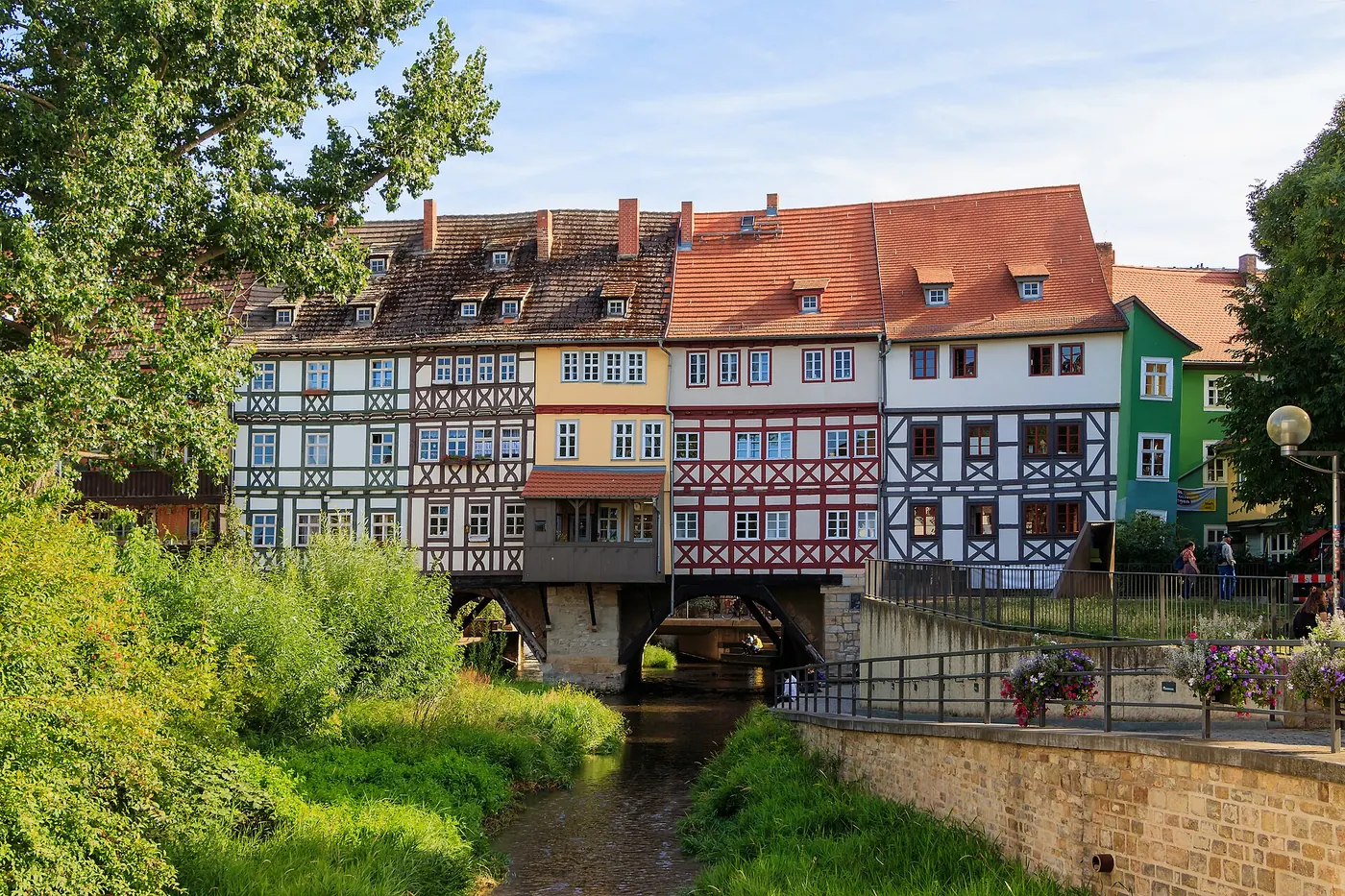
These are cities of 100,000–300,000 residents with lower entry prices. Chemnitz grew in 2025, and Jena, a university and optics city, is known for its stability. In each of them it is worth choosing the district carefully [verify: data for each city].
Comparison table: types of cities in the east
| Type | Examples | Demand drivers | Entry price |
|---|---|---|---|
| Large growing city | Leipzig, Dresden | Universities, chips, logistics, migration | Medium |
| Mid-size university city | Jena, Potsdam | Students, research, proximity to a big city | Medium |
| Mid-size industrial city | Chemnitz, Magdeburg, Halle | Industry, public institutions, university | Low |
This is a qualitative assessment based on official demographic trends, not a price ranking. Before any specific city, check its own data. The division into A, B and C cities is explained in the guide A, B and C cities in Germany.
What you buy
Which properties do you buy in the east?
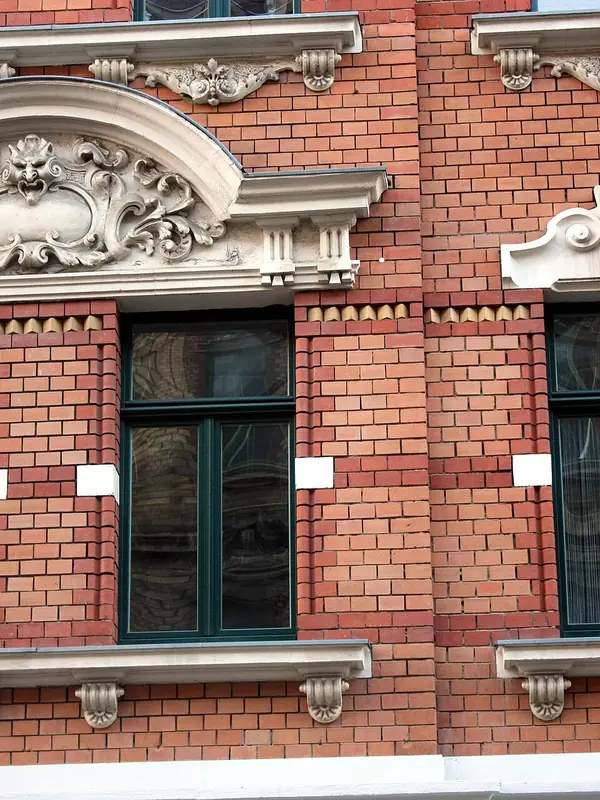
- Altbau from the Gründerzeit period: buildings from the end of the 19th century and the beginning of the 20th century, with high ceilings. In Leipzig and Dresden many of them were renovated after 1990. In a renovated building, check when it was renovated and what was done, because a renovation from the 1990s is already 30 years old.
- Plattenbau: prefabricated construction from the East German period. Low entry prices, and in the growing cities a steady base level of demand. In many of them the owner is a large or municipal housing company, and individual apartments are less common.
- New construction (Neubau): mainly in Leipzig, Dresden and Potsdam. A higher price, a good energy certificate, and lower renovation costs in the first decade.
The differences between an old and a new building, including depreciation, energy and management, are explained in Altbau versus Neubau.
Tax and financing: is there a difference in the east?
The tax rules are uniform across Germany: rent is subject to income tax in Germany even for a resident of Israel, depreciation on the building may be deducted, and a sale after more than 10 years is exempt from capital gains tax in Germany, according to the German Income Tax Act. What does differ is the transfer tax rate by state, which we saw above, and the financing terms: the bank checks each city and district on its own merits, and in the growing cities the property valuation relies on proven demand [verify: bank policy]. The full picture, including the Israeli part, is in real estate taxation in Germany.
Who is eastern Germany real estate especially suited to?
- Those looking for a big city at an accessible entry price: Leipzig and Dresden offer the demand of a big city at prices lower than the west.
- Those building on young demographics: students, technology workers and young families in the university cities.
- Those planning a long holding: 10 years or more, with an exemption from capital gains tax in Germany on sale.
- Those willing to choose at the district level: in the east, as in any market, the right district is a central part of the deal.
The principled comparison between the two parts of the country is in eastern versus western Germany. Those weighing eastern Germany against another growing market in the region can read Germany versus Poland.
And what about Berlin?
Berlin is geographically in the east, but it is a market of its own: a capital, a population that grew by 0.4% in 2025, and its own rental rules. For this reason it has its own page: real estate in Berlin. All our cities, east and west, appear on the Germany real estate map.
Open properties in eastern Germany
Frequently asked questions
What people ask us About Eastern Germany
Is it worth investing in real estate in eastern Germany?
Large, growing cities like Leipzig and Dresden offer stable demand and entry prices lower than the west. The decision is made at the city and district level, so each property is checked on its own merits.
What is the transfer tax in eastern Germany?
It depends on the state: 5.5% in Saxony, 5% in Thuringia and Saxony-Anhalt, 6% in Mecklenburg-Vorpommern and 6.5% in Brandenburg, as of November 2026. In Bavaria, for comparison, 3.5%.
Which cities in eastern Germany are growing?
In 2025 Leipzig and Chemnitz each grew by 0.7%, and Berlin by 0.4%. Dresden, Potsdam and Jena rely on universities, research and new industry, and Saxony as a whole benefited from a positive migration balance.
What is the BBSR classification?
The federal institute BBSR rates every municipality in Germany by its growth trend: population, migration, employment and the tax base. It is an official, free tool, and a foreign investor can use it to check the city that interests them before choosing a property.
Leipzig or Dresden?
Leipzig is larger and has grown faster over the last decade. Dresden relies more on the chip industry and a technical university. Both are cities worth checking, and the difference between them is smaller than the difference between two districts in the same city.
Can you buy a whole building in the east?
In the mid-size cities, like Chemnitz, Magdeburg or Halle, entry prices sometimes allow buying a small building. Before buying, check the condition of the building, the leases and the demand on the street, and calculate the yield in a conservative scenario.
Sources
- German Ministry of Justice: Income Tax Act, sale within 10 years (in force 2026)
- Destatis: population data by state, 2025 (16.06.2026)
- Statistisches Landesamt Sachsen: Saxony's population in 2025 (10.07.2026)
- Stadt Leipzig: municipal statistics (30.09.2026)
- BBSR: classification of municipalities by growth trend (2019–2024)
- German Ministry of Justice: Real Estate Transfer Tax Act, base rate (in force 2026)
This is not investment, tax or legal advice. All investment involves risk.

Intro call
Where in the east, and whether at all?
We will go through the data of the city that interests you, the demand and the holding plan, and tell you honestly whether it suits you.
In the photo: Munich and the Alps, Bavaria