City · Saxony
LeipzigInvesting in Leipzig Real Estate: What Is Behind the Fastest-Growing City in Eastern Germany
Investing in Leipzig real estate has attracted investors for more than a decade, because the city added tens of thousands of residents within a few years. Today it has 630,757 residents (Municipal Statistics Office, 30.09.2026), a resale apartment cost an average of about 2,720 EUR per sq m in 2024, and rents keep rising. Transfer tax in Saxony is 5.5%. Whoever buys today chooses a district with proven demand and calculates by the actual rent.
Video
Leipzig in one minute
Investing in Leipzig: the figures, what to check and common questions, in a short video. All details and sources are in the text below.
No narration, background music only. The video does not play by itself.
In brief
- 630,757 residents in September 2026, after more than a decade of growth.
- Resale apartment: an average of about 2,720 €/sq m in 2024, in a range of 1,300–6,800 (Sparkasse Leipzig market report).
- Median rent in existing buildings: 8.80 €/sq m in 2024, up 4.8% (same report).
- Transfer tax 5.5% in Saxony (as of November 2026).
- The rent brake applies in Leipzig until 30.06.2027.
Why here
Why do investors look at Leipzig real estate?
Leipzig is the best-known success story of eastern Germany. The city attracted industry, logistics, students and young people from Berlin, and apartment prices rose accordingly. The page investing in eastern Germany explains what sets Leipzig apart among the eastern cities.
The second reason is the price against Berlin. A resale apartment in Leipzig costs about half the price of a sought-after apartment in Berlin, and the rental market is less regulated. The full comparison, including rent and regulation, is on the page Berlin or Leipzig for investment.
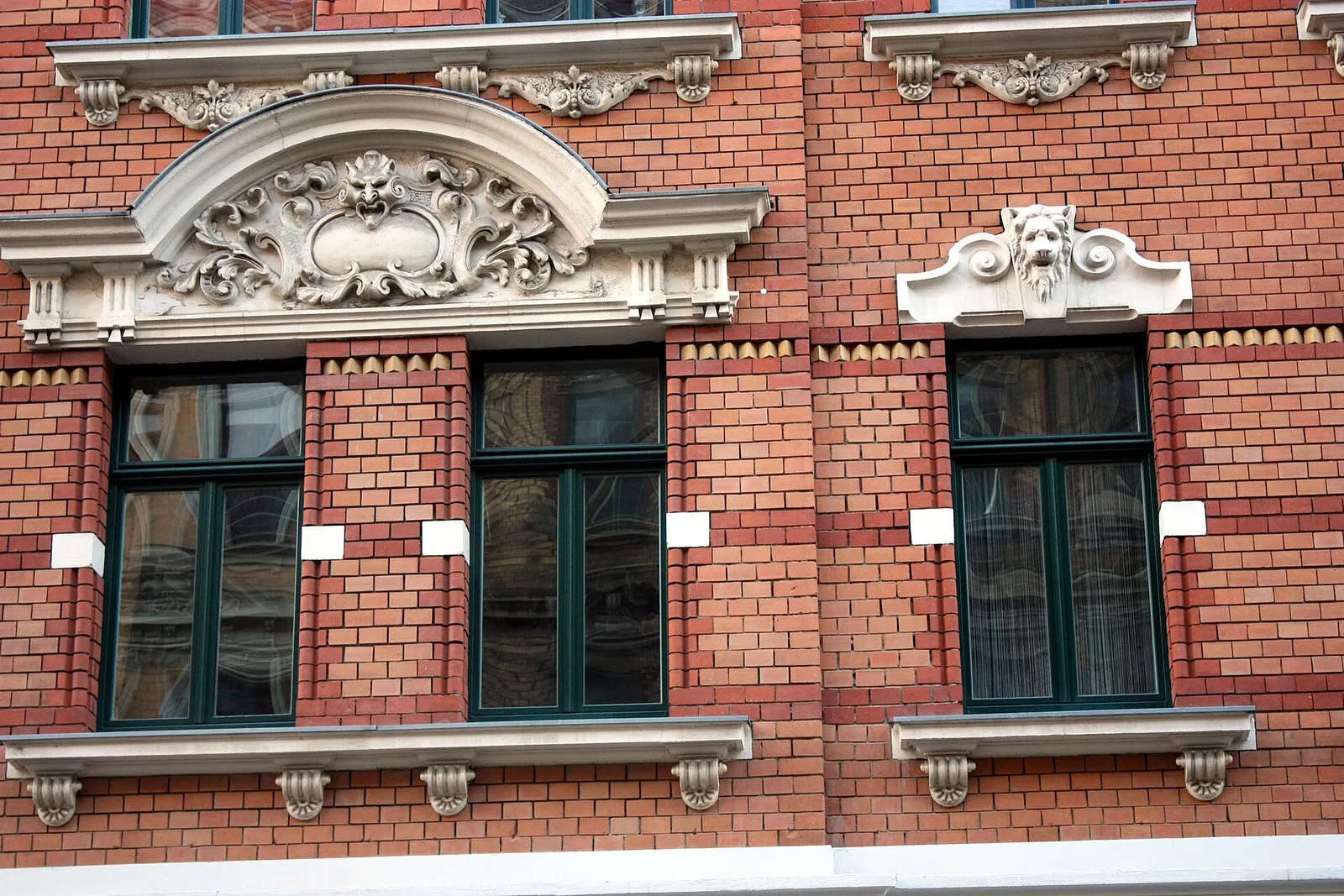
The third reason is the building stock. Leipzig has one of the largest Gründerzeit stocks in Germany: buildings from the end of the 19th century with high ceilings, most of which were renovated after reunification. This gives a large supply of apartments of 60–90 sq m, which is exactly what tenants look for.
In numbers
Key figures: Leipzig in numbers
- Population630,757Leipzig Statistics and Elections Office, 30.09.2026
- Resale apartment priceabout 2,720 €/sq m (range 1,300–6,800)Sparkasse Leipzig (IIB) housing market report, 2024 data
- Median rent, existing buildings8.80 €/sq m, up 4.8%Sparkasse Leipzig (IIB), 2024
- Transfer tax5.5%Saxony, since 2023, as of November 2026
- Employees covered by social insurance (place of work)294,540Municipal Statistics Office, 31.03.2026
- StudentsSaxon State Statistical Office
The important figure for the investor is the ratio between price and rent. According to the Sparkasse report, rent in existing buildings rose by 4.8% in 2024. When rent rises, the gross yield on the entry price improves, so it is important to buy at the right transaction price and not by listing prices. At the end of 2025 the city continued to grow, according to the Leipziger Internet Zeitung report on city data.
Economy and employment: who employs in Leipzig?
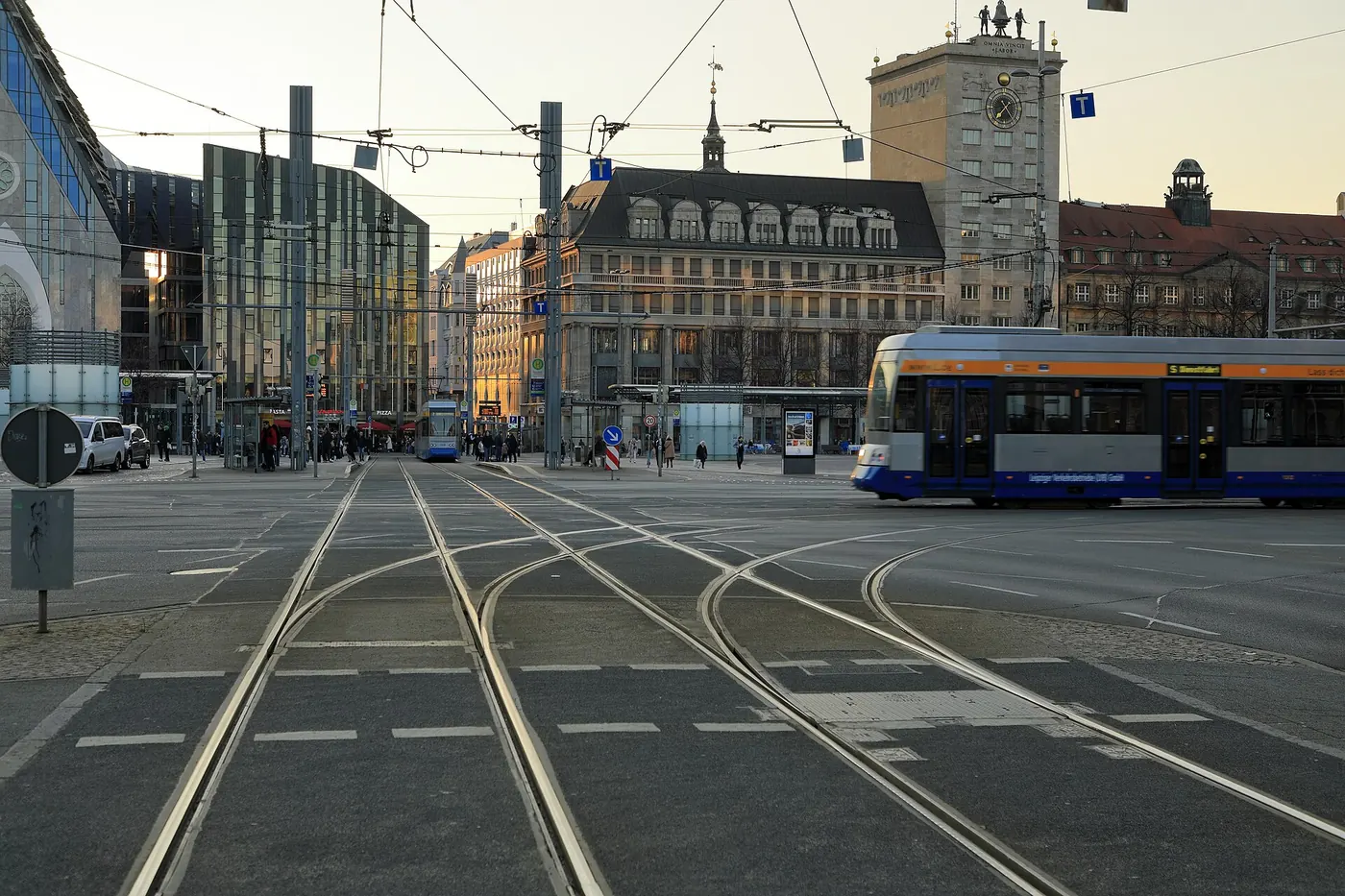
Leipzig's industrial base was built after reunification. BMW and Porsche have production plants north of the city, and DHL operates its large European air sorting hub at Leipzig/Halle airport. Suppliers, logistics centers and service companies grew around them, and the city has about 294 thousand employees.
Joining this are the University of Leipzig, large hospitals, the book fair and an active culture and tourism sector. According to the Municipal Statistics Office, in the first half of 2026 about 970 thousand guest arrivals were recorded in the city's hotels. For an investor, the combination of industry, logistics, academia and services creates rental demand from different audiences.
For this reason Leipzig especially suits an investor looking at ten years or more, who enjoys both rental income and the continued development of the city.
Want to check whether it suits you?
Book an intro callWhere in the city
Leipzig districts: where is the rental demand?
According to the Sparkasse report for 2024, the average price in the western district was about 2,210 €/sq m, and in the city center about 3,780 €/sq m. Within the districts there are clear differences:
- Zentrum and Südvorstadt: the city center and the district south of it. Highly sought after, prices at the top end, many students and young couples.
- Connewitz: south of Südvorstadt. An alternative character and high rental demand. Check street by street.
- Plagwitz and Lindenau: old industrial districts in the west, along the canals, which have undergone strong renewal. Galleries, loft apartments and young families. Here the purchase needs to be precise on price.
- Gohlis: north of the city, impressive Gründerzeit buildings and a family population. Stable and in demand.
- Schleußig: green, relatively upscale, between the parks. Good value retention and long-term tenants.
- Grünau: a large panel-block (Plattenbau) district in the west, with a low entry price.
- Reudnitz and the east: more accessible than the city center, with renewal that continues to advance.
What you buy
Which properties suit Leipzig?
An apartment in a renovated Gründerzeit building. This is Leipzig's classic property. Most buildings were renovated in the 1990s and 2000s, so before signing you read the owners' association minutes and check the renovation reserve and the plan for the roof, facade and systems.
An apartment in a new building. Entry prices are higher, but depreciation (AfA) for new construction allows declining-balance depreciation of 5% per year for construction started between 30.9.2023 and 1.10.2029. The guide on depreciation (AfA) in Germany explains when this pays off.
A whole building. In Leipzig you can still find small buildings, but most transactions in the city are single apartments: over 80% of transactions in 2025 (according to a report on the Leipzig valuation committee report). This is an active apartment market, with many buyers and sellers.
Before you decide
Advantages and what to check in Leipzig
Advantages
- An entry price much lower than Berlin and Munich
- Rent that rises from year to year
- A large stock of renovated Gründerzeit buildings
- Industry and logistics with large employers
- A university city with steady demand from young people
What to check
- The district and the street: proven rental demand
- The rent against the city rent index
- The renovation reserve and the work plan in the building
- The existing lease: level, tenure and payment history
- The additional costs, including 5.5% transfer tax
Who is Leipzig real estate especially suited to?
Leipzig suits an investor who wants a large, sought-after city at an entry price lower than Berlin, with a balanced yield and an active rental market. It especially suits those who choose a sought-after district such as Gohlis or Südvorstadt and plan a holding of ten years or more. Those comparing regions in Germany will find the differences on the page eastern or western Germany.
What do you check before buying in Leipzig?
You check the district on its own merits, because each district in the city behaves differently. You check what is planned for the building in the coming decade, especially in buildings renovated in the early 2000s. And you check the rent against the rent brake, which applies in Leipzig until 30.06.2027.
Illustrative example
A calculation example: an apartment in Leipzig
To the yield calculatorAn example for illustration only, with explicit assumptions. A 65 sq m apartment at 2,720 €/sq m, the 2024 average, that is 176,800 EUR. Transfer tax 5.5% (9,724 EUR), notary and registration usually about 1.5%–2% by market estimates (about 2,650–3,540 EUR). Without a broker, the entry comes to about 190 thousand EUR.
If the apartment is let at 8.80 €/sq m, the 2024 median, annual income before expenses is about 6,860 EUR, a gross yield of about 3.6% on the entry price. This is close to Nuremberg, at a lower entry price. The net calculation, after management, association fees and tax, is explained in the guide closing costs for buying a property and on the page real estate taxation in Germany.
What does this mean for management from Israel?
In a city with an active rental market like Leipzig, a good management company affects the yield no less than the price you paid. So you check in advance who advertises the apartment, how quickly they find a tenant, and how they report to you. What is included in management and what it costs is explained on the page property management in Germany.
Open properties in Leipzig
Frequently asked questions
What people ask us About Leipzig
Is it worth investing in Leipzig real estate?
Leipzig is a market with real demand, rising rents and entry prices lower than Berlin. It especially suits those who choose a district with proven demand, calculate by the actual rent and plan a long holding.
How much does an apartment in Leipzig cost?
According to the Sparkasse Leipzig housing market report, a resale apartment cost an average of about 2,720 €/sq m in 2024, in a wide range of 1,300–6,800 €/sq m. In the western district the average was about 2,210 and in the center about 3,780.
What is the rent in Leipzig?
According to the same report, the median rent in existing buildings was 8.80 €/sq m in 2024, up 4.8%. Since July 2025 Leipzig has a new city rent index (Mietspiegel), which is the basis for rent increases.
Is rent regulated in Leipzig?
Yes. The rent brake applies in Leipzig and Dresden until 30.06.2027, under an ordinance of the Saxon government. In a new lease the rent is limited to up to 10% above the local customary rent. Details in the guide on the rent brake.
Leipzig or Dresden?
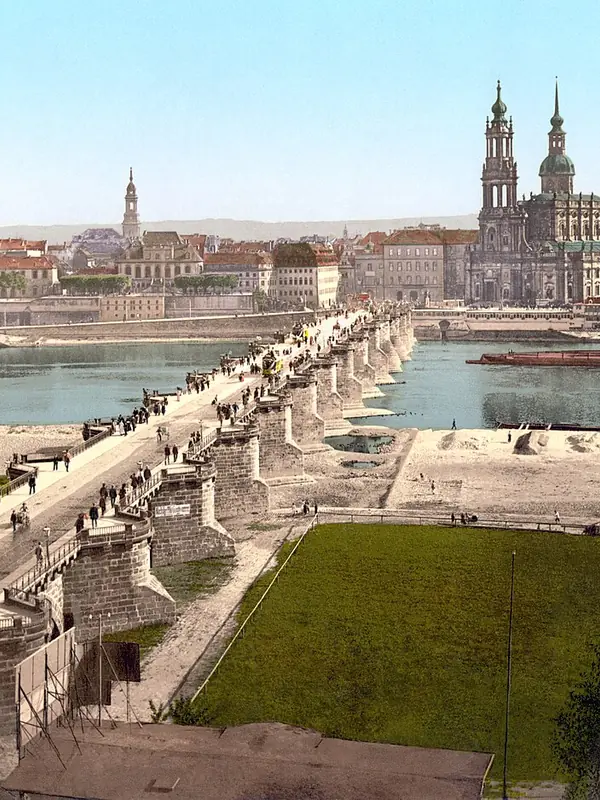
Both are in Saxony, with the same transfer tax and the same rent brake. Leipzig is larger and relies on industry and logistics. Dresden relies on chips and the public sector, and the average rent according to its index is lower.
Sources
- City of Leipzig: rent index 2025–2027 (in force from 1.7.2025)
- Leipzig Statistics and Elections Office, key figures (30.09.2026)
- Leipziger Internet Zeitung, Leipzig's population at the end of 2025 (January 2026)
- Leipziger Internet Zeitung, Sparkasse Leipzig housing market report 2024 (March 2025)
- Deutscher Mieterbund, list of municipalities with a rent brake (2026)
- German Ministry of Justice: tenancy law, the rent brake (in force 2026)
- German Ministry of Justice: Income Tax Act, depreciation on buildings (in force 2026)
This is not investment, tax or legal advice. All investment involves risk.

Intro call
Let's check Leipzig together
If Leipzig looks interesting to you, we will go through the district, the real rent and the costs with you before you commit.
In the photo: Munich and the Alps, Bavaria