City · Bavaria
MunichInvesting in Munich Real Estate: Stability, Steady Demand and Who It Suits
Investing in Munich real estate is an investment in one of the most sought-after markets in Germany: the average transaction price for an existing apartment reached 8,150 EUR per sq m in 2025, almost double Berlin. What you get in return is a rich market, steady demand and value retention over decades. Munich suits those who buy a property the way one buys a quality bond: stability and long-term value retention.
Video
Munich in one minute
Investing in Munich: the figures, what to check and common questions, in a short video. All details and sources are in the text below.
No narration, background music only. The video does not play by itself.
In brief
- 1,612,429 residents at the end of 2025, an increase of 8,653 in one year (Municipal Statistics Office).
- Existing apartment: 8,150 EUR per sq m. New apartment: 10,500 EUR per sq m (2025 transaction average).
- Average rent in the City of Munich rent index, 2025: 15.38 EUR per sq m. On re-letting: 22.52 EUR (city housing market barometer, 2025).
- Transfer tax 3.5%, among the lowest in Germany (Bavaria, as of November 2026).
- Gross yield by a simple calculation: about 2.3% to 3.3% per year, before expenses, in a value-retention market.
Why here
Why do investors look at Munich?
Munich is the capital of Bavaria, the state with one of the lowest unemployment rates in Germany: 4.2% in September 2026, against 6.4% on the national average (BA). The city is home to large corporate headquarters, two of the largest research universities in Europe and a broad technology sector. High salaries allow tenants to pay high rent, and demand for apartments remains steady over the years.
The second reason is limited supply. The city is dense (5,189 residents per sq km), land is expensive, and new construction does not keep up with population growth. The result is a stable market, with a continuing shortage of apartments and demand that rests on population growth.
The third reason is especially relevant to Israelis: transfer tax. In Bavaria it is 3.5%, the base rate in the federal law, compared with 6% to 6.5% in other states.
In numbers
Key figures: Munich in numbers
- Population (main residences)1,612,429Municipal Statistics Office, 31.12.2025
- Population growth8,653+ in 2025Municipal Statistics Office, 2025
- Average transaction price, existing apartment8,150 EUR per sq mStuttgart Valuation Committee, BIG 7 comparison (2025)
- Average transaction price, new apartment10,500 EUR per sq mSame (2025)
- Average rent, rent index15.38 EUR per sq mMunich rent index (Mietspiegel), 2025
- Average rent on re-letting22.52 EUR per sq mCity housing market barometer, 2025
- Average rent, new apartment25.93 EUR per sq mSame
- Transfer tax3.5%Real estate transfer tax (Grunderwerbsteuer), as of November 2026
- Students, LMU and TUM51,737 and 52,292Bavarian Statistical Office, winter 2025/26
Some of TUM's students study at campuses outside the city (Garching, Freising). Even without the exact figure, this is one of the largest concentrations of students in Germany, with another 18,826 students at the Munich University of Applied Sciences (HaW).
How much does real estate in Munich yield?
Let's calculate simply. An existing apartment costs 8,150 EUR per sq m on average. If the rent is the rent index average, 15.38 EUR, annual income is about 185 EUR per sq m, that is a gross yield of about 2.3%. On re-letting at the market price, 22.52 EUR, the yield rises to about 3.3%. From this you deduct association fees that are not passed on to the tenant, upkeep and tax.
This comparison explains why most investors classify Munich as a city of stability and value retention. Whoever buys there builds on value growth over time and on a liquid market, with buyer demand when they want to sell. How to calculate net yield, with all the expenses, is explained in the net yield guide.
It is also worth knowing the rental rules. Bavaria updated the tenant protection ordinance (Mieterschutzverordnung), in force from 1.1.2026, and according to the Bavarian Ministry of Justice the rent brake now applies in 285 municipalities. An increase for an existing tenant is limited there to 15% in three years, under German tenancy law. Munich appeared on the list of municipalities in the November 2025 draft.
Want to check whether it suits you?
Book an intro callEconomy and employment: what does demand rely on?
Munich's economy is more varied than that of most cities in Germany. BMW has its headquarters and main plant in the city. Siemens, Allianz and Munich Re are run from Munich. Around the two universities a technology and research sector grew, and Google, Apple and Microsoft operate development centers in the city. Bavaria's public sector, financial institutions and university hospitals also employ tens of thousands.
This variety matters to an apartment owner. Tenants come from several different sectors, from automotive and insurance to technology, research and health, so demand rests on a broad base. This is one of the reasons Munich is considered a value-retention market.
Where in the city
Munich districts: where it is pricey and where it suits letting
| District | Character | Note for the investor |
|---|---|---|
| Altstadt-Lehel, Maxvorstadt | City center and the universities | Prices at the top end. Demand from students and academics, value retention |
| Schwabing, Bogenhausen | Established residential, Altbau and villas | Stable tenants and high liquidity on sale |
| Haidhausen, Au | Inner, sought-after, partly protected (Erhaltungssatzung) | Renovations and conversions require approval |
| Sendling, Westend | Urban, mixed, close to the center | Price slightly below the center, broad demand |
| Pasing, Laim | West, good transport | Balance between price and demand |
| Neuperlach, Moosach, Milbertshofen | City edges, construction from 1960–1980 | Lower entry price, check the association costs |
| Freiham | A new district in the west, under construction | Neubau and a district developing with its infrastructure |
The gaps within Munich are large. An apartment in Maxvorstadt and an apartment in Neuperlach are two completely different investments, even if both are "in Munich".
What you buy
What types of property are common in Munich?
Most transactions are single apartments in buildings with an owners' association. Whole buildings are usually sold to institutional investors. Common types:
- One- and two-room apartments: high demand from students and singles. A higher price per sq m than in larger apartments.
- Apartments in post-war construction: the majority in the in-between districts. Check the energy certificate and the association's renovation plan, according to the energy certificate guide.
- Neubau: 10,500 EUR per sq m on average (2025), with a higher annual depreciation and an exception on first letting.
Illustrative example
A numerical example: a 60 sq m apartment in Munich
To the yield calculatorAssumptions: average transaction price for an existing apartment (2025), no broker, rent according to the rent index. Conversion to shekels at 4 NIS per euro, for illustration only.
| Item | Amount |
|---|---|
| Price (60 × 8,150) | 489,000 EUR (about 1.96 million NIS) |
| Transfer tax 3.5% | 17,115 EUR |
| Notary and registration (market estimate of 1.5%–2%) | 7,335–9,780 EUR |
| Total before financing | about 513,500–515,900 EUR |
| Annual rent by the rent index (15.38 × 60 × 12) | 11,074 EUR |
Note the tax line. On an apartment almost double in price, transfer tax in Munich is similar in amount to the tax on an apartment in Berlin, because the rate is almost half as low. It is worth reading the guide to minimum equity before you start searching.
Before you decide
Advantages and what to check in Munich
Advantages
- Historic value retention, steady demand and a liquid market
- A varied economy and unemployment below the national average
- Transfer tax of 3.5%, among the lowest in Germany
- Tenants with relatively high incomes
- A population that grew by 8,653 in 2025
What to check
- The required equity and the ratio between financing and equity
- The district: every district in Munich is a different market
- The rent against the city rent index
- The association's renovation plan and the energy certificate
- Long-term planning: value growth over years
Who is Munich real estate especially suited to?
Munich especially suits an investor looking for stability and long-term value retention, who is ready to hold a property over the years. It also suits those who want a property in a liquid market, with high-income tenants. Those looking for a higher monthly cash flow can spread the capital between two apartments in a B-city, such as Nuremberg. The difference between large and small cities, in yield and liquidity, is explained in big city versus small town and in the guide to A, B and C cities. Those looking for another A-city for comparison can look at Stuttgart.
What does this mean for an investor from Israel?
Munich is convenient to manage from a distance: there are direct flights from Tel Aviv, about four hours, and the airport is a major Lufthansa hub. In practice most of the work does not require a flight. Signing at the notary is possible with a power of attorney, and a local management company handles the tenant and the owners' association.
An additional consideration is currency. The income and the mortgage are in euros, and your capital is probably in shekels. The euro-shekel rate affects the yield when it is calculated in shekels, in both directions. Those looking for diversification outside Israel see a property in euros as an advantage, and those who will need the money in shekels plan for it in advance.
A third consideration is financing. In Munich many investors finance a smaller share of the deal, or hold the apartment with no leverage at all, to keep a positive monthly cash flow. This is a decision worth making before searching for a property, not after.
Open properties in Munich
Frequently asked questions
What people ask us About Munich
How much does an apartment in Munich cost?
The 2025 transaction average for an existing apartment was 8,150 EUR per sq m, and for a new apartment 10,500 EUR (BIG 7 comparison). A 60 sq m apartment therefore costs about 490,000 EUR on average, before taxes and costs. In the central districts the price is above the average.
What is the yield on real estate in Munich?
By our simple calculation, the rent index average against the average transaction price gives a gross yield of about 2.3%, and on re-letting about 3.3%. Munich's main advantage is stability and value retention over the years. This is not an official market figure but an illustration.
Why is transfer tax in Munich low?
Because Bavaria has not raised the rate since 1997 and stayed with the base rate of 3.5% in the federal law. Most other states raised it to between 5% and 6.5%.
Is rent regulated in Munich?
Yes. The rent brake applies in Munich under the Bavarian state ordinance, updated from 1.1.2026, and the limit on increases for an existing tenant is 15% in three years. It is recommended to check the current wording of the ordinance before signing.
Munich or Nuremberg?
Munich is more sought-after and retains value, Nuremberg offers a lower entry price and usually a higher yield, at the same 3.5% transfer tax. The choice depends on whether you prefer value retention or cash flow.
Sources
- City of Munich: rent index (2025)
- City of Munich: housing market barometer (2025)
- Bavarian Ministry of Justice: tenant protection ordinance, 285 municipalities (16.12.2025)
- Bavarian Statistical Office: students in winter 2025/26 (2026)
- German Ministry of Justice: Real Estate Transfer Tax Act, tax rate (in force 2026)
- German Ministry of Justice: tenancy law, rent increases (in force 2026)
- Stuttgart Valuation Committee, BIG 7 comparison: average transaction prices (2025)
- Munich Municipal Statistics Office: population and density (31.12.2025)
This is not investment, tax or legal advice. All investment involves risk.

Intro call
Want to check whether Munich suits your portfolio?
We will compare Munich with other cities in Bavaria with you, according to your capital, financing and goal.
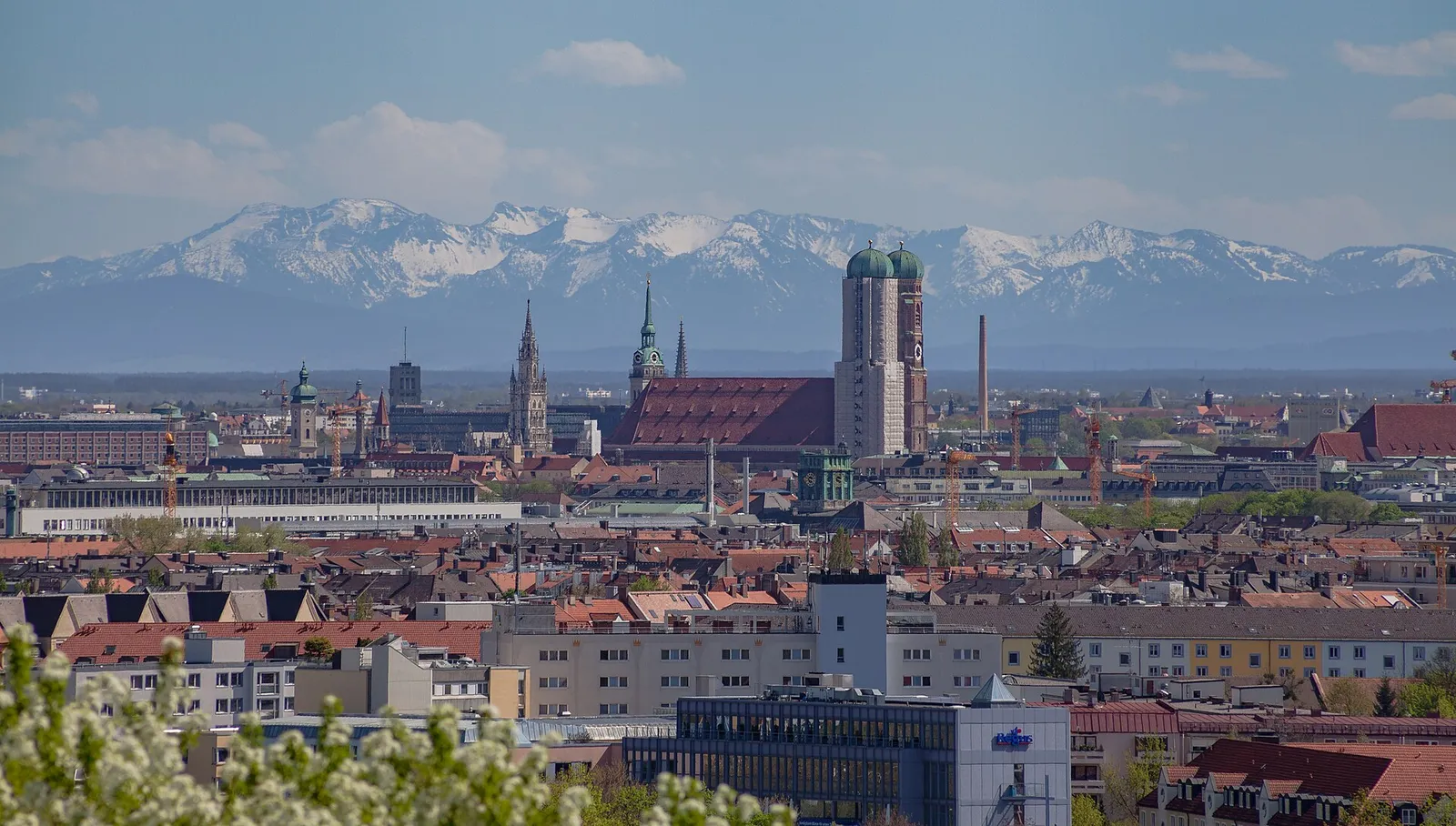
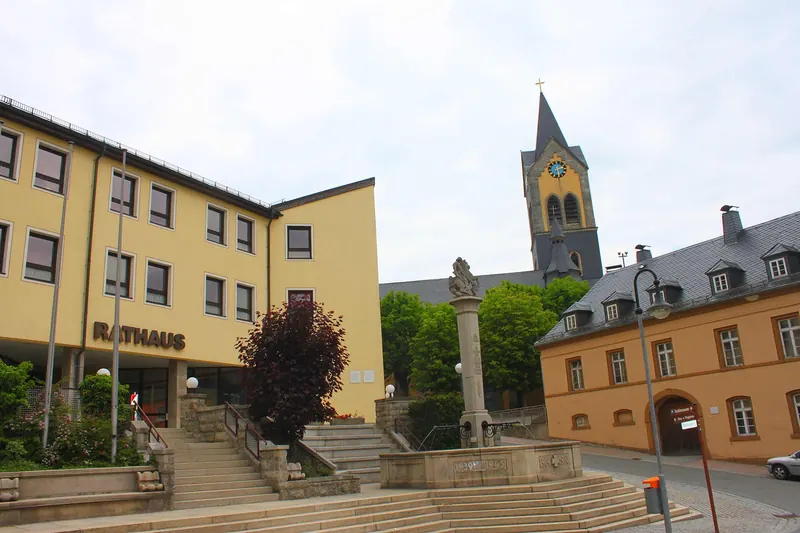
In the photo: Munich and the Alps, Bavaria